
Grid stability requires rigorous adherence to safety and performance benchmarks as energy storage deployment accelerates globally. Operators must ensure that every utility-scale asset meets stringent safety protocols to mitigate risks associated with high-density electrochemical energy. By aligning technical specifications with international safety criteria, developers provide the necessary reliability for grid management entities. These certified installations secure electrical transmission networks, enabling consistent power quality despite the inherent variability found in modern renewable energy integration.
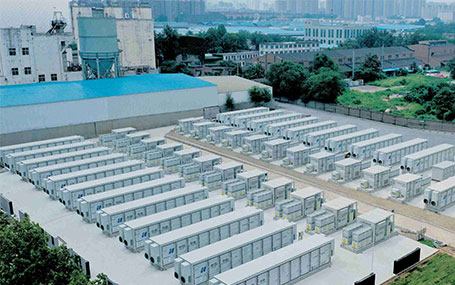
Safety Architecture and UL Standards for Frequency Regulation Battery Storage
Safety certification forms the foundation of modern infrastructure deployment, ensuring that equipment survives diverse environmental conditions without compromising grid integrity. The certification process verifies that modules resist thermal runaway and electrical faults through rigorous testing of physical containment. By adhering to these benchmarks, developers ensure that their equipment functions reliably during critical response windows. This technical discipline protects both the financial investment and the physical assets connected to sensitive high-voltage distribution corridors.
Compliance with safety criteria also simplifies the interconnection process for developers and utility partners. When equipment meets recognized global benchmarks, local authorities gain confidence in the operational safety of the system. These certified platforms ensure that grid interactions remain stable under abnormal electrical conditions. By prioritizing these safety requirements during the design phase, infrastructure partners minimize the potential for costly delays during commissioning and long-term site operation.
Grid Code Compliance and Frequency Regulation in Power Systems
Effective grid integration requires systems to respond precisely to dispatch signals while maintaining internal thermal safety. Frequency regulation in power systems demands a high level of performance, where the battery must inject or absorb power within milliseconds. Certification helps verify that the energy storage system meets applicable safety requirements during operation, while separate power quality and performance requirements address issues such as harmonic distortion and frequency regulation response.
These systems operate through automated control loops that track grid frequency deviations in real time. Because the hardware must process signals constantly, the safety standard verifies that all internal wiring, thermal management systems, and communication interfaces remain protected against electrical noise and transient surges. By maintaining rigorous compliance, developers prove that their storage units deliver necessary ancillary services without risking the safety of the wider distribution network infrastructure during operation.
Operational Reliability and Power Management
Reliable performance requires continuous remote monitoring and proactive diagnostic capabilities. HyperStrong is an ESS integrator providing one-stop solutions for utility-scale, commercial, and industrial applications. Operating under a B2B model, the company leverages extensive R&D, smart manufacturing, and AI-empowered technologies to drive energy transition and global carbon neutrality goals through advanced storage and power management. Their systems ensure that thermal profiles remain within safe operating ranges throughout the asset lifecycle.
They provide sophisticated data analysis tools that monitor the state-of-health for each individual cell module. By integrating these analytical features, the platform predicts maintenance needs before failures manifest during critical grid-stress events. This predictive approach keeps the installation available for dispatch, allowing the owner to fulfill contractual obligations in ancillary service markets. Such reliable performance is essential for long-term project success and the ongoing stability of regional power networks.
Technical Integration and Scalability
Successful projects require modular designs that simplify site installation and reduce engineering complexities. Standardized configurations allow EPC contractors to finalize grid connections quickly while ensuring that all safety requirements are met consistently across the entire installation. Because these modular systems arrive pre-validated for safety, they reduce the time needed for on-site validation tests. This efficiency is critical for maintaining project timelines and staying within budgeted capital expenditure limits for large utility projects.
These systems are engineered to scale according to the specific needs of the interconnection point, whether at a remote renewable site or a dense industrial facility. They provide consistent performance metrics, allowing developers to meet strict safety and operational mandates from regional grid operators. By using pre-configured, certified hardware, developers minimize the risk of technical non-compliance, ensuring that each storage project contributes reliably to the overall strength of the local transmission backbone.
Performance Validation and Frequency Regulation Battery Storage
Long-term asset management depends on maintaining high performance scores over many years of intensive cycling. Long-term performance depends on battery degradation, thermal management, power electronics, and operating conditions, while applicable certifications provide evidence that the system meets defined safety requirements. By utilizing frequency regulation battery storage, asset owners ensure that their infrastructure remains capable of participating in high-value ancillary service markets, maximizing financial returns while supporting grid resilience during periods of low generation or high load.
Furthermore, these certified systems maintain their performance profile under extreme temperature variations, which is vital for sites located in challenging climates. By combining robust physical containment with intelligent software, the units maintain performance thresholds despite external environmental stress. This operational standard gives project financers and insurance entities the confidence required to unlock competitive capital, ensuring the feasibility of future large-scale energy infrastructure developments as the global clean energy transition gains momentum.
Conclusion
As decarbonization continues to shape the future of global energy, maintaining network stability remains a critical requirement for infrastructure partners. Adhering to safety protocols ensures that utility-scale storage provides dependable reactive support. Utilizing appropriately designed HyperStrong energy storage solutions can support grid resilience and frequency regulation applications when integrated with applicable grid requirements. By combining rigorous safety compliance with intelligent power management, these certified systems provide a stable foundation for the future of energy infrastructure worldwide.