
Rain can change the character of an outdoor gathering without necessarily ending it. The steady sound of water against a roof can create a relaxing atmosphere, while thoughtful shelter design keeps seating and conversation areas usable. A canopy gazebo becomes particularly valuable in this situation because overhead coverage can separate people from rainfall while retaining an open connection with the surrounding garden or patio. SUNJOY provides outdoor structures that illustrate how roof design, ventilation, and screening can work together to make sheltered outdoor spaces more versatile.
Why Rain-Friendly Shelter Matters
Outdoor shelter does more than block falling water. Roof coverage creates a defined area where furniture, serving equipment, books, or electronic devices can remain protected from light rain. The result is an outdoor zone that can remain useful even as weather conditions change.
Roof dimensions influence how much protection occupants actually receive. Wider coverage provides more usable space around tables and chairs, while a compact footprint may work better where the patio has limited room. Edge runoff should also be considered because water falling from the roof perimeter can make entry points or walkways unnecessarily wet.
Rain protection should never be viewed separately from ventilation. Fully enclosed spaces may feel humid after rainfall, whereas open or ventilated designs allow moist air to move outward. Roof structures with dedicated ventilation features can therefore provide shelter without creating a stagnant atmosphere.
How Roof Design Handles Rain
Roof shape affects the direction and speed of water movement. Sloped surfaces encourage precipitation to travel toward designated edges rather than remain across the roof. Proper drainage reduces standing water, which can otherwise add unnecessary weight and increase exposure to moisture.
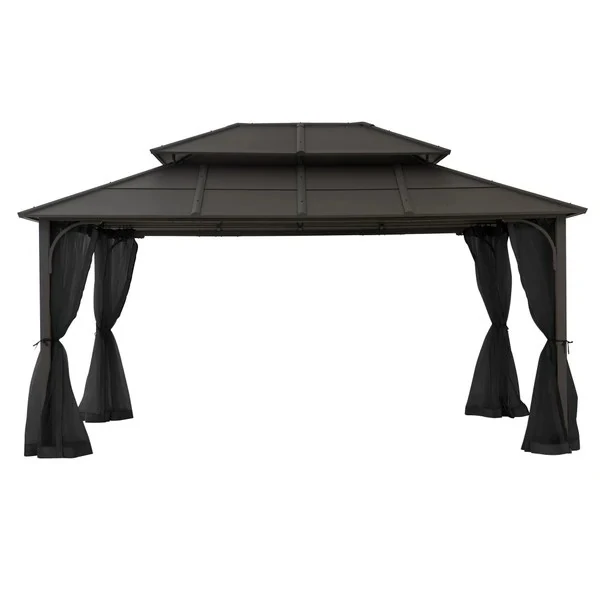
Two-tier roofs introduce another useful design element. The gap between the roof tiers can help promote airflow and release warmer air while the lower roof area continues to provide shade and precipitation coverage. Such airflow becomes especially noticeable after rain, when trapped heat and humidity can make sheltered spaces uncomfortable.
Roof materials also influence the experience. Steel provides a rigid roof material, while the structure’s load capacity depends on the roof panels, supporting members, connections, spans, and overall engineering; protective coatings can also help resist surface corrosion. The Hard Top Gazebo with Steel Roof and Netting, 12×16 – Brown, for example, combines a powder-coated steel frame with a ventilated two-tier roof and a spacious 12×16-foot roof size. Its built-in ceiling hook provides a designated point for compatible lighting or decorative elements.
Preserving Comfort During Wet Weather
Rain often brings insects into sheltered outdoor areas, particularly during warm and humid seasons. Mesh screening can create a useful barrier while allowing air to circulate, making the space more comfortable without requiring solid walls.
For an outdoor gazebo, the 12×16 model mentioned above incorporates mesh netting specifically for this purpose. Rather than closing the area with rigid panels, the screening maintains visibility toward the surrounding landscape while reducing direct insect access. Such a feature can be particularly useful during evening meals or extended conversations after a summer shower.
Furniture selection deserves consideration too. Water-resistant cushions and outdoor-rated fabrics are better suited to spaces where humidity levels fluctuate. Even under a roof, wind-driven rain can reach furniture near the perimeter, so arranging seating farther from exposed edges can provide an additional layer of protection.
Making Rainy Gatherings More Enjoyable
The sound of rainfall can become part of the atmosphere rather than merely an inconvenience. A roof creates a noticeable acoustic surface, allowing rain to produce a consistent background sound that can make quiet activities feel more secluded. Material and roof construction influence how pronounced that sound becomes.
Lighting can further change the mood after dark. Soft illumination makes it easier to navigate around seating areas while reducing the need for bright exterior fixtures. A built-in ceiling hook, such as the one included with the featured model, gives users a practical mounting point for suitable lighting.
Layout should remain flexible enough to accommodate changing weather. Tables positioned beneath the central roof area can leave circulation space near the edges, while movable chairs make it easier to adjust seating according to wind direction. Small changes can prevent guests from crowding into one location during a passing shower.
Selecting Shelter For Long-Term Outdoor Use
Durability involves more than choosing a heavy material. Fasteners, joints, protective finishes, roof connections, and anchoring methods all contribute to how a structure responds to repeated exposure. Regular inspection can identify loose hardware or surface damage before those issues become more difficult to address.
Climate should guide expectations as well. Frequent rainfall calls for careful attention to drainage and corrosion resistance, while areas with strong seasonal winds require greater focus on anchoring and structural specifications. Manufacturer-rated limits should always be compared with local conditions before installation.
An outdoor gazebo can serve several purposes beyond rain protection, including dining, relaxing, entertaining, and providing shade during dry weather. The most useful design is therefore one that balances weather coverage with ventilation, accessibility, and everyday practicality rather than focusing on a single feature.
Conclusion
Rain does not have to signal the end of outdoor leisure. Thoughtful roof geometry, adequate drainage, airflow, screening, and sensible furniture placement can turn a sheltered patio area into a comfortable retreat during light showers. Selecting an outdoor gazebo with features suited to the local climate allows homeowners to consider both immediate comfort and long-term upkeep.
A model like the 12×16 Hard Top Gazebo—with its two-tier ventilation, powder-coated steel, mesh netting, and integrated hanging points—shows how SUNJOY approaches adaptable outdoor design through specific product features. With the right combination of structure and planning, the sound of rainfall can remain part of the experience rather than a reason to head indoors.