
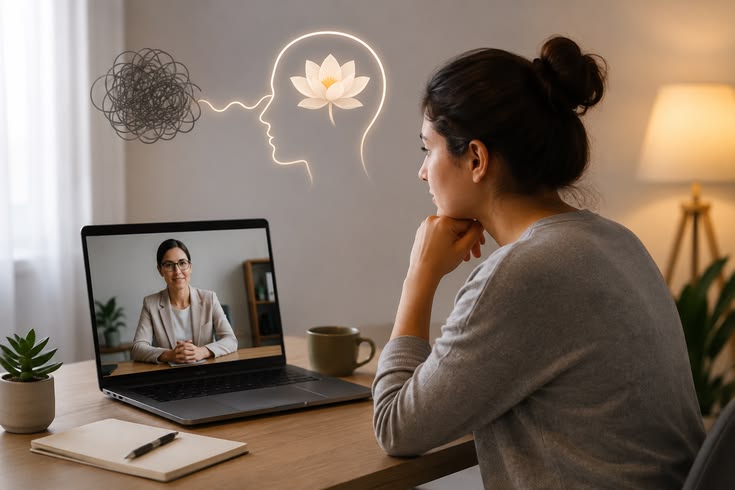
Choosing to seek counselling can raise another question almost immediately: should sessions take place online or face to face? Both approaches provide an opportunity to speak with a professional about emotional and personal difficulties, but the experience and practical arrangements can be different. The best choice will often depend on individual circumstances and preferences.
Face-to-face counselling offers a clear physical separation from everyday life. Travelling to an appointment and entering a dedicated counselling environment can help some people shift their attention away from work, family responsibilities and other distractions. They may also simply prefer communicating with someone who is physically present.
Online counselling offers a different kind of convenience. Sessions can be attended from home or another suitable private location, removing the need to travel. This can be particularly valuable for people with demanding work schedules, caring responsibilities or limited time.
Location can also influence the decision. Someone living close to a counselling service may find face-to-face appointments easy to attend. A person who would otherwise need to travel a significant distance may find online sessions considerably more practical.
Privacy should be considered with either format. A counselling room is specifically intended to provide a private environment. For online counselling, the client needs to create this privacy themselves. This might mean choosing a room where they will not be interrupted, using headphones and making sure other people cannot overhear the conversation.
Some clients worry that online counselling will feel less personal. Others actually find speaking from their own home more comfortable. There is no universal response. The quality of counselling depends on factors including trust, communication, consistency and whether the client feels able to talk honestly.
It is also worth considering what will make regular attendance realistic. Choosing face-to-face counselling because it initially seems preferable may not be helpful if travelling regularly becomes difficult. Equally, choosing online appointments purely for convenience may not be ideal if someone knows they find video conversations uncomfortable.
Preferences can change too. Someone may initially favour remote appointments and later decide they would like face-to-face sessions, or use online counselling when travel or other circumstances make attending in person difficult.
The important point is that the two formats do not need to be viewed as competing versions of counselling. They are different ways of accessing professional support.
Providers offering online and face-to-face counselling give clients greater opportunity to consider which arrangement works best for their circumstances. My Solution Wellbeing provides counselling support for a range of emotional and personal difficulties, allowing individuals to explore the format that best enables them to speak openly and engage consistently with the counselling process.