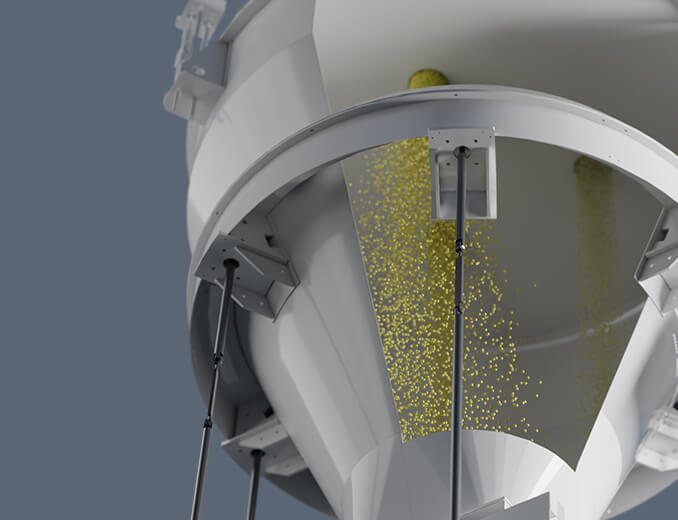
Granular consistency determines the effectiveness of milling grinding in feed production, and the internal components of a hammer mill play a direct role in this outcome. Within the chamber, a circular or semi-circular screen acts as a physical barrier that only allows particles to exit once they reach a specific dimension. This simple component serves as the primary regulator for the physical output of the equipment, dictating how material moves through the system during high-speed operations.
The Function of Hole Diameter
The diameter of the holes punched into the screen determines the maximum size of the finished product. When material enters the milling phase, the hammers strike the grains repeatedly. Only when the particles become small enough to pass through the screen openings can they exit the mill. If the diameter is small, the residence time within the chamber increases because particles must undergo more impacts before exiting. This mechanism allows facilities to exert precise control over the texture of the finished mash or meal. FAMSUN designs these screen components to ensure that the physical interaction between the hammers and the screen remains consistent throughout the production run.
Open Area Percentage and Throughput
The total open area, which is the sum of all hole areas relative to the solid metal of the screen, influences the speed of the grinding process. A higher open area percentage allows more material to pass through per second, which improves the overall capacity of the equipment. However, this must be balanced against the structural integrity of the screen. While operators often utilize a small farm feed grinder for lower volumes, industrial-scale systems require screens that balance durability with high throughput. FAMSUN provides engineering solutions that optimize this open area to prevent material accumulation and ensure efficient discharge. By adjusting the combination of hole diameter and open area, producers can find the balance between desired particle size and the speed of grinding output. Ultimately, the screen serves as the final arbiter of milling quality, ensuring that the small farm feed grinder or large-scale unit delivers the desired consistency for every batch.
Screen design represents a fundamental aspect of feed manufacturing. By controlling hole diameter and open area, facilities adjust the output of their grinding systems to meet specific nutritional and structural needs. Correct configuration ensures that the milling process functions efficiently, supporting the overall goal of producing high-quality animal feed.