When you go online, you hear about different types of proxy servers and how they can change your connection. Some are for speed, some for privacy and some for both. Choosing the right one is about matching the tool to your needs.
What Is a Proxy Server?
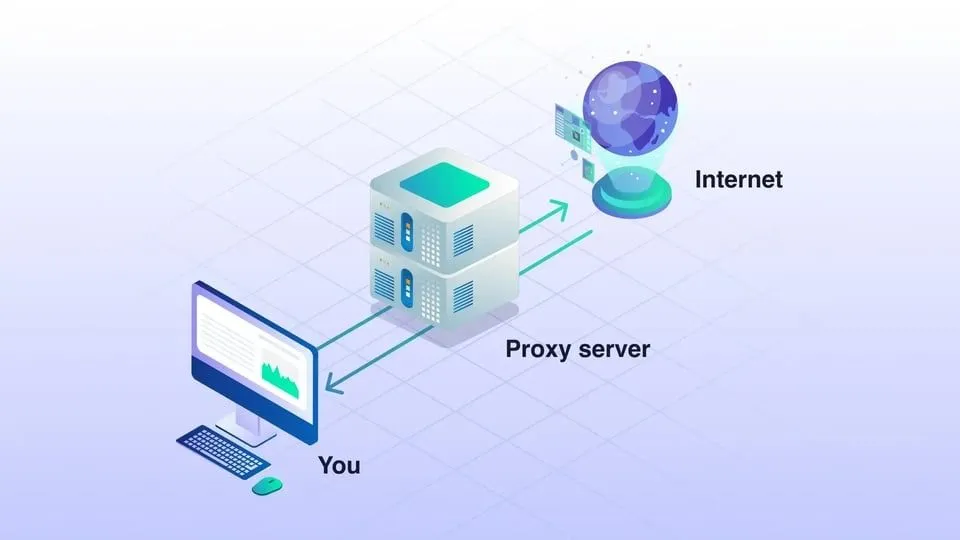
In simple terms, a proxy server is like a middleman. The proxy takes over, forwards your request and then returns the response instead of your computer talking directly to a website. In the end the website sees the proxy’s address not yours.
This can hide your location, increase security or sometimes even speed up connections.
If you want to learn more about how different proxy configurations operate, take a look at this in-depth guide to proxy types.
Main Types of Proxy Servers
Proxy servers differ from one another. Some are only for high traffic, while others are for businesses or users. Below is a breakdown of the most popular kinds and their applications.
Forward Proxy
Most people think of this as the classic. It replaces your IP with its own and stands between you and the internet. Do you want to cover your location or stream a show that is only accessible overseas? That is what a forward proxy can do.
Reverse Proxy
Consider this one to be the website’s bodyguard. It conceals the server itself rather than a user. Reverse proxies are used by businesses to maintain site stability, balance visitor traffic, and make it more difficult for hackers to directly attack their servers.
Transparent Proxy
You may be using this one without even realizing it. A transparent proxy doesn’t completely conceal your IP address, nor does it disguise itself. They are frequently used by workplaces, schools, and cafes to filter traffic or enforce browsing policies without requesting consent.
Anonymous Proxy
By hiding your IP, an anonymous proxy allows you some privacy, but it still lets websites know that a proxy is being used. It functions well for light browsing, but some platforms immediately block traffic when they notice it.
High Anonymity (Elite) Proxy
This is the option for stealth mode. It masks your IP address as well as the fact that you are running a proxy at all. These are often the best option if privacy is your top concern.
Datacenter Proxy
Cloud providers create datacenter proxies in bulk, which are quick, inexpensive, and simple to obtain. Websites that actively search for them can typically detect the difference.
Residential Proxy
Real internet service providers lend their IPs to residential proxies. Websites trust them more because they appear to be typical home connections.
How to Choose the Right Proxy Server
Choosing the appropriate proxy depends on the job, not on a universal “best.” People tend to use residential or high-anonymity proxies if privacy is a top concern because they are more difficult to track down.
The opposite is typically true for developers working on large scraping projects, who opt for datacenter proxies due to their speed and affordability.
Reverse proxies are frequently used in business settings to protect servers and balance traffic. On the other hand, when businesses and educational institutions wish to have more control over how users browse, they often implement transparent proxies.
Common Use Cases & Best Fit
Probably without recognizing it, you have encountered proxies. Travelers frequently use forward proxies when they stream shows from their home country. Residential proxies are used by e-commerce companies to test how advertisements or prices appear to actual users in various geographical locations.
For speed, tech teams almost always use datacenter proxies when they need to pull large amounts of data, such as when scraping flight prices or performing automated tests. And high-anonymity proxies are the ones that people trust the most when they are unwilling to compromise on privacy.
Wrapping Up
Once you understand the different type of proxy servers, it becomes easier to see which one fits your situation. Some are better suited for individuals, others for companies, and a few are designed purely for heavy technical tasks. The real key is to focus less on labels and more on what you need, then pick the proxy that gets the job done.