
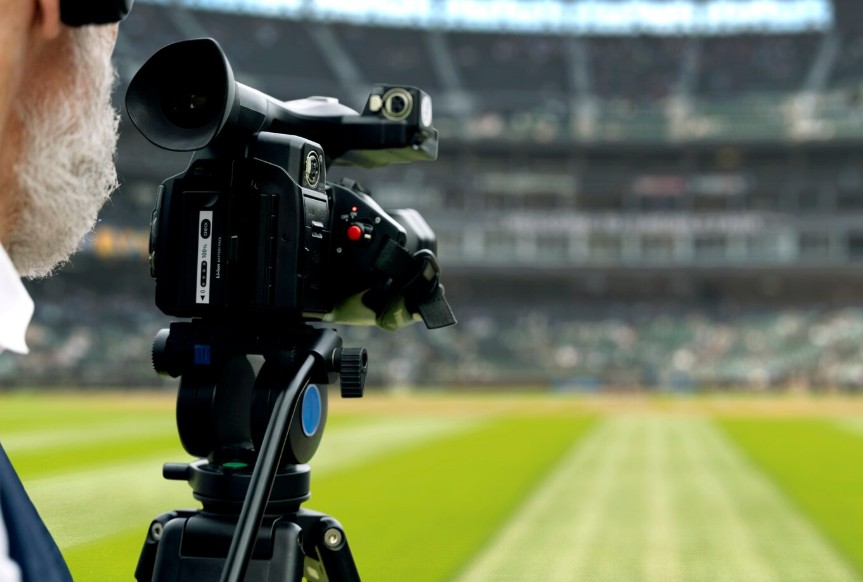
The Video Assistant Referee (VAR) was intended to resolve controversies in sports, but it has also created more controversy overall. Players, fans, and even betting markets are left with more uncertainty. Now, instead of betting markets moving steadily, they must also pause, rewind, and reinterpret bets. Now, instead of betting markets moving steadily, they must also pause, rewind, and reinterpret bets. Betting markets are no longer moving at a steady pace. VAR has not only changed betting markets but also the game of football.
Betting Markets Now React to Silence, Not Action
In uncertain situations, a goal is not a goal, or it is a no-goal. It is a breadth of outcomes. The market instantaneously prices that uncertainty. Bettors no longer simply respond to events. They respond to moments when nothing appears to be happening on the surface. One of the most noticeable shifts over the last few seasons in online betting has been the treatment of VAR checks.
The stadium is silent, time freezes, and money begins to shift in response to the most recent decision. What appears to be a chaotic dance is a real-time resumption of probability. Before VAR, goals were scored, and margins shifted. Now, margins shift multiple times each play. There is a pause, then a VAR signal appears, and the margin is dynamically adjusted based on the referee’s distance from the screen. Live bettors with experience in this rhythm do not panic. They act in the narrow moment when margins go idle and then reopen, making live betting a more interpretive and less visceral experience.
Why VAR Disproportionately Affects Certain Markets
In matches where VAR decisions are frequent, it is obvious why the Melbet alternative link is the clear leader. Markets do not close and open at random. They close and open in multiple stages, reflecting the range of possible completions as more data is added. Odds will open, but very cautiously. Spreads will tighten. Only once the last signal is processed do prices settle. This multi-layered approach emulates the way analysts do this, not in binary ‘yes’ or ‘no’ logic, but in brackets. This structure is helpful in VAR’s chaos.
In VAR matches, bets do not respond equally. The totals market, the next-goal market, and the match-results market are the most reactionary. Specific player bets and long-term bets rarely move. This market activity is a genuine reflection of the bets where VAR is most impactful. Penalties, very tight offsides, and suspected red cards are significantly more impactful than ever-goal technologies. They directly change expected goals, game tempo, and current game state.

VAR Changed How Bettors Read Momentum
Earlier, momentum was emotional. Now, it’s technical. A goal celebration turned defensive as VAR overturned the call. Confidence within the group shifted, prompting tactical changes. Momentum bettors watching body language during VAR moments quickly spotted the shift. The markets reacted. Not instantly, though. A few seconds of this and they spell, posture, and interpret, rather than react.
Players, as well as the game’s probabilities, are affected by VAR. A striker’s hesitation right before a finish, a defender raising arms instead of tracking runners, a referee managing a game more cautiously. The markets react to this hesitation. Expected goals slightly drop in matches with more frequent VAR interruptions. The game’s tempo slows, and fouls increase near the penalty area. Behavioral odds are shifting, and technology is evidence of this change.
Why VAR Made Live Betting More Complex
Speed used to be the name of the game for live betting. Now, it’s about patience. With VAR, you can lock in a poor value for a trigger, and if you’re too late, you’ll miss the adjustment altogether. Now, timing has replaced instinct as the most valuable skill. This has quietly filtered out specific markets for casual bettors and rewarded those who know how the system works.
It’s obvious how much VAR has fractured the betting market, but the pace of the game has barely changed. The difference between how markets behave now is an example of that.
| Aspect | Pre-VAR Matches | VAR-Era Matches |
| Goal finality | Immediate | Delayed |
| Odds movement | Single shift | Multi-stage |
| Market suspensions | Short | Frequent |
| Live betting windows | Predictable | Fragmented |
Across Asia, football fans have accustomed themselves to analytical viewing. They support multiple leagues with varying officiating styles and use VAR in different situations. This exposure allows for variable pattern recognition. Bettors understand which leagues have more stoppage time, which referees are more interventionist, and which leagues are more likely to have stoppage reviews. That contextual knowledge is valuable.
VAR Isn’t Going Away — Markets Know It
Even as tech advances, uncertainty will persist. Decision-making is a margin. Betting markets do know. Odds do not factor in VAR disruption. It has become a factor. Every tech check has a price. Every tech pause is consequential.
What the fans perceive is actually the market structure. Var added uncertainty, but also a new kind of predictability. The markets had learned their new predictable rhythm. Experienced bettors had learned it too. The core shift is this: Betting is not about what has happened, but instead what could be reversed.